

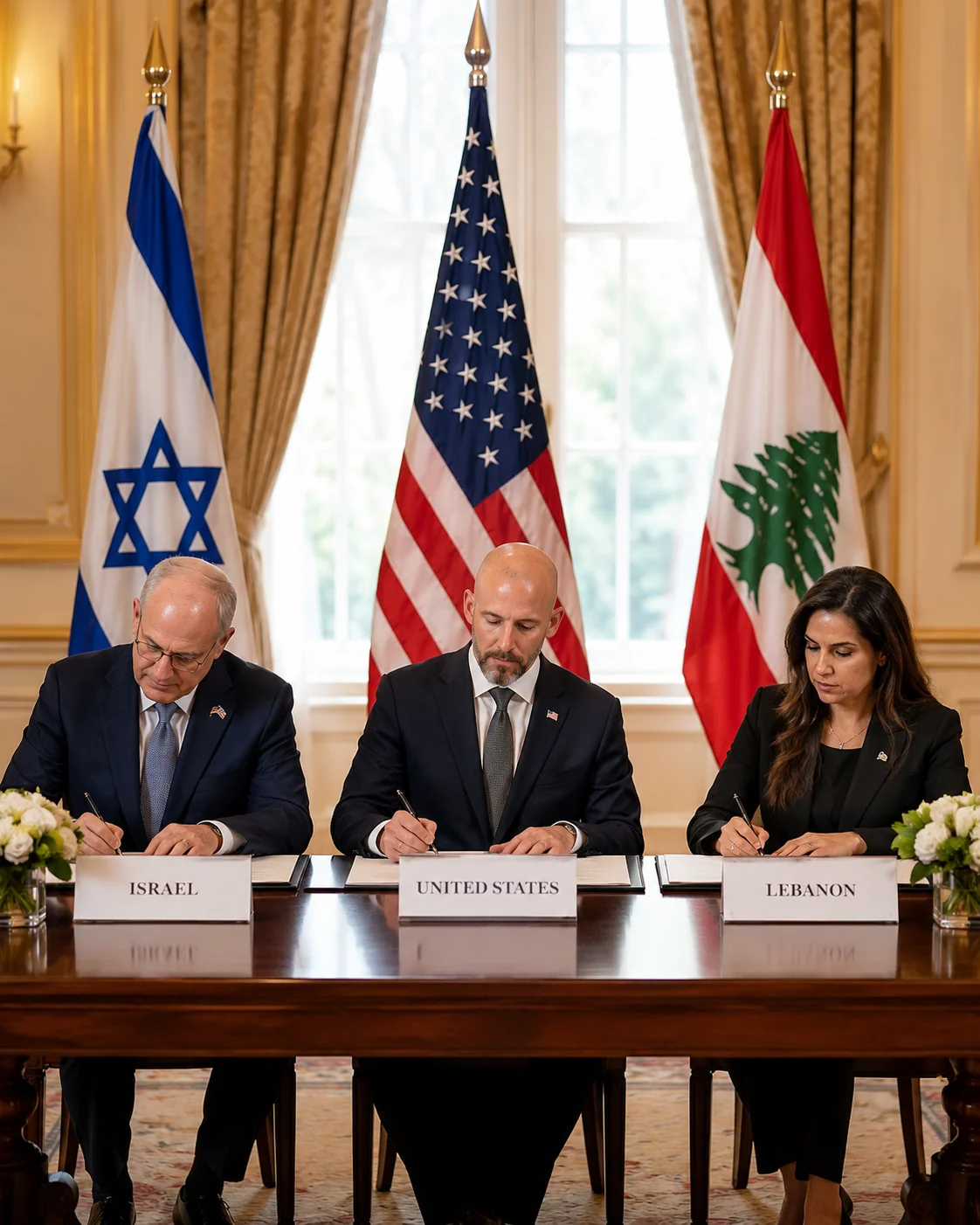
After months of cross-border violence and rising regional tensions, Israel and Lebanon have signed a U.S.-brokered framework agreement that aims to move both sides toward a more stable future.
While officials from all three countries described the agreement as a significant diplomatic achievement, they also acknowledged that it is only the beginning of what could be a long and challenging process.
What Is the New Agreement About?
The framework agreement was signed in Washington by representatives of Israel, Lebanon, and the United States after several days of negotiations.
According to U.S. officials, the deal is designed to reduce hostilities, strengthen Lebanon’s sovereignty, and establish a roadmap for improving security along the Israel-Lebanon border.
However, many operational details are expected to be worked out during the implementation phase rather than immediately.
Why Is This Agreement Important?
The conflict between Israel and the Iran-backed Hezbollah group has caused widespread destruction in southern Lebanon and northern Israel.
Thousands of people have been killed or injured during the fighting, while more than one million residents in Lebanon have been displaced from their homes.
The new framework seeks to create conditions that could eventually allow displaced families to return safely while reducing the risk of another major military confrontation.
What Role Will the United States Play?
The United States has committed to supporting implementation of the agreement through a new Military Coordination Group involving all three parties.
Washington also announced additional humanitarian assistance for Lebanon and pledged further support to strengthen the capabilities of the Lebanese Armed Forces.
Officials say these measures are intended to help the Lebanese military gradually expand state control in areas affected by the conflict.
What About Israeli Troops and Hezbollah?
One of the most sensitive issues remains Israel’s military presence in parts of southern Lebanon.
Israeli Prime Minister Benjamin Netanyahu said Israeli forces could remain in certain security areas until Hezbollah is disarmed and security concerns are addressed.
The agreement also proposes a phased transfer of some areas to the Lebanese Armed Forces, beginning with selected pilot zones.
Hezbollah Rejects the Deal
Despite the signing ceremony, the agreement does not include Hezbollah as a party.
Senior Hezbollah officials have publicly rejected the framework, arguing that disarmament is unacceptable and warning that attempts to enforce such measures could increase internal tensions in Lebanon.
This opposition highlights one of the biggest challenges facing the implementation of the agreement.
Can This Framework Deliver Long-Term Peace?
Diplomatic experts believe the agreement represents an important opportunity, but they caution that lasting peace will depend on successful implementation, continued negotiations, and cooperation from all parties involved.
Border security, the future of Hezbollah’s armed presence, humanitarian recovery, and political stability remain unresolved issues that could influence the agreement’s success.
For now, the framework offers a path toward de-escalation—but whether it evolves into a lasting peace will become clearer in the months ahead.
Final Thoughts
The signing of this framework agreement marks a notable diplomatic milestone after months of conflict. While many difficult issues remain unresolved, the willingness of Israel, Lebanon, and the United States to continue negotiations signals a renewed effort to reduce tensions and improve regional stability.
The world will now be watching closely to see whether this initial agreement can be transformed into a durable and lasting peace.
Source:
Reuters, U.S. Department of State, international media reports.
Our audience means everything to us.
Have feedback or suggestions to make us better? We’re always listening—feel free to get in touch with us at truthora2026@gmail.com








Leave a Comment