

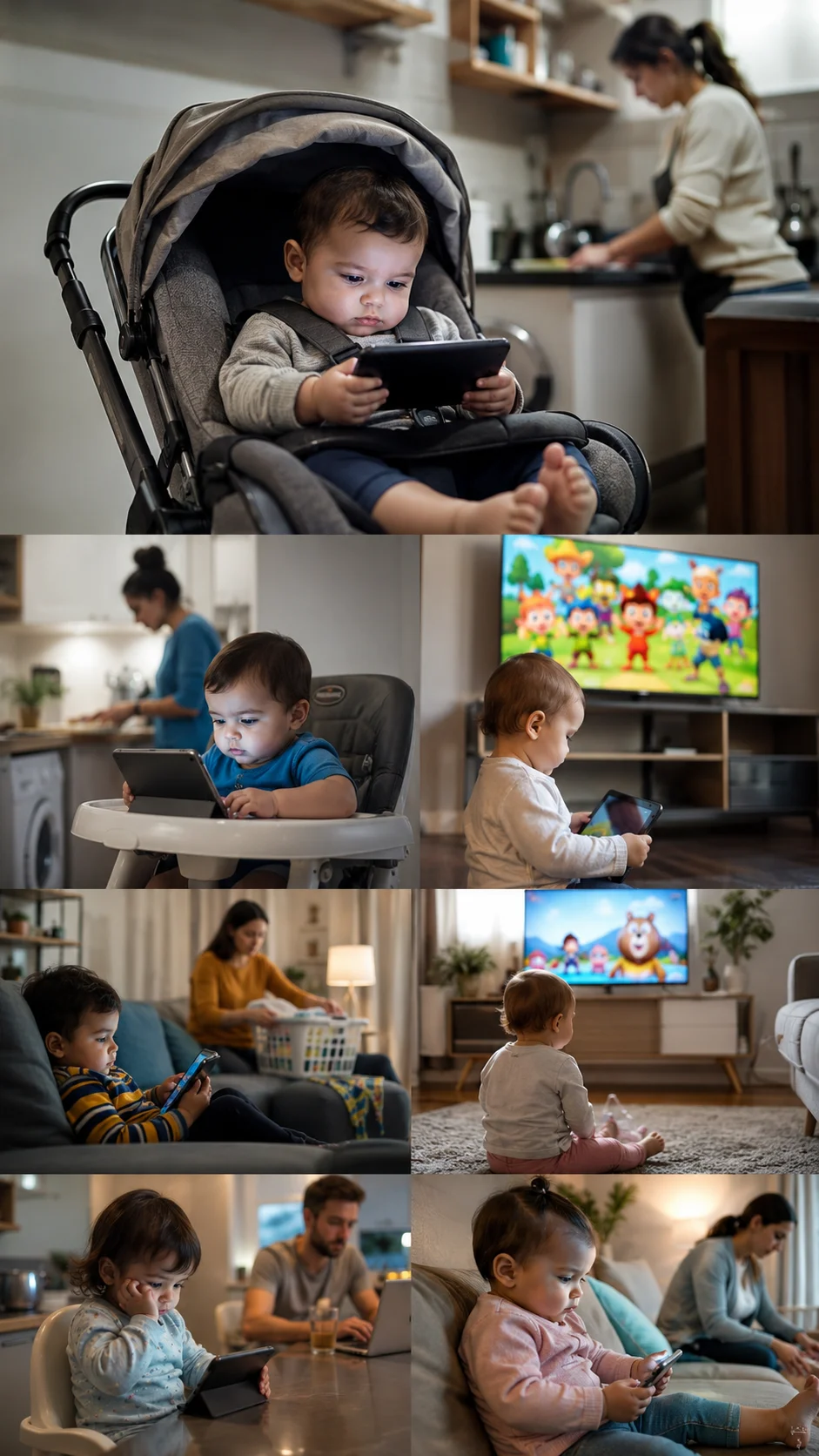
As smartphones and tablets become a part of daily family life, a major new study is urging parents to think twice before introducing screens to babies under the age of two. Researchers say the earliest years of life are critical for brain development, and regular screen exposure during this period may carry long-term risks for children’s health, learning, and emotional well-being.
The findings have reignited the global conversation about children’s digital habits, with experts calling for stronger guidance and better support for parents rather than blame.
Why Are Experts Concerned About Screen Time for Babies?
The research, described as one of the most comprehensive reviews of global evidence on the topic, examined studies from around the world to understand how digital devices may affect infants and toddlers.
According to the researchers, babies under two learn best through face-to-face interaction, physical play, and responsive communication with parents and caregivers. When screens replace these experiences, children may miss important opportunities to build language, social, and emotional skills.
Experts emphasize that while technology has become unavoidable in modern life, intentional screen use for babies offers little proven developmental benefit and may increase potential risks.
What Health and Developmental Risks Were Identified?
The review highlights several concerns linked with regular screen exposure during the first two years of life, including:
- Delayed language and communication skills
- Reduced parent-child bonding
- Less physical activity and interactive play
- Sleep disturbances and overstimulation
- Possible effects on eye health
- Increased risk of childhood obesity
- Greater reliance on digital devices for comfort instead of caregivers
Importantly, the researchers noted that their review does not prove screens directly cause these developmental issues. Instead, the available evidence suggests a strong association that deserves further scientific investigation.
Are Parents Being Given Enough Guidance?
One of the study’s biggest concerns is what researchers describe as a “baby blind spot” in public policy.
Much of today’s discussion focuses on teenagers and social media, while babies and toddlers receive comparatively little attention despite rapid growth in screen use during infancy.
Researchers believe many parents are unintentionally developing unhealthy digital routines simply because clear guidance has been limited. They argue families need practical advice that fits modern life instead of feeling judged for their parenting choices.
Should All Screen Time Be Avoided?
The researchers recommend avoiding regular intentional screen time for children under two years old whenever possible.
However, they acknowledge that passive exposure—such as seeing a television in the background or joining a short video call with relatives—is often difficult to avoid in today’s connected world.
Current UK government guidance also advises avoiding screen time for children under two while recognizing limited shared activities, such as video calls with family or parent-supported interaction, may sometimes occur.
A Global Debate Is Growing
The new findings arrive as governments around the world continue introducing stricter rules on children’s digital use.
Several countries have proposed or introduced tougher measures to reduce young people’s exposure to social media and digital platforms, reflecting growing concern about children’s online wellbeing and healthy development.
What Can Parents Do?
Experts suggest parents do not need to panic, but they should focus on creating healthy daily routines.
Simple activities such as talking, reading books, singing songs, playing on the floor, and spending quality time together remain some of the most valuable ways to support a baby’s early brain development.
Technology can be useful for adults, but during a child’s first two years, real human interaction continues to be the most powerful learning tool.
Final Thoughts
The latest research is not about blaming parents or banning technology completely. Instead, it serves as a reminder that the first two years of life are a unique period of growth when personal interaction matters most.
As scientists continue studying the long-term effects of digital devices on young children, experts agree on one message: meaningful conversations, physical play, and emotional connection remain far more valuable than any screen.
Source:
The Guardian, University of Leeds research team (Action on Digital Device Immersive Conditions Team), Leeds Trinity University.
Our audience means everything to us.
Have feedback or suggestions to make us better? We’re always listening—feel free to get in touch with us at truthora2026@gmail.com









Leave a Comment