

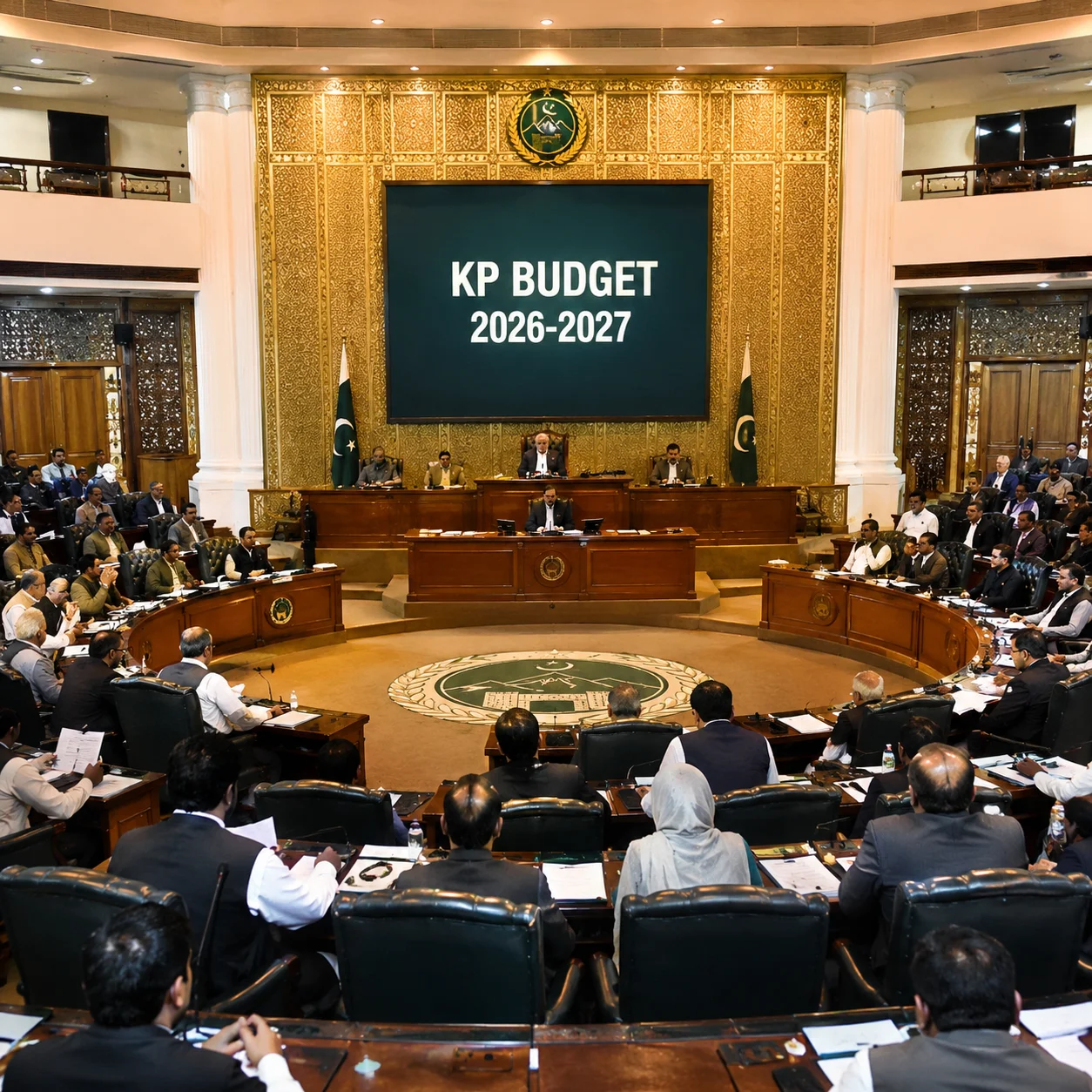
Khyber Pakhtunkhwa Unveils Finance Bill with Relief Measures and Revenue Reforms
The Khyber Pakhtunkhwa (KP) government has presented its Finance Bill for the fiscal year 2025-26 alongside the provincial budget, introducing a combination of tax relief measures and new revenue-generating policies. While the government has avoided imposing broad-based new taxes, it has expanded fixed taxation on several professions, businesses, and commercial activities.
The latest budget proposal has attracted significant attention from taxpayers, business owners, and investors across the province. Why? Because it attempts to strike a delicate balance between supporting low-income citizens and strengthening provincial revenues.
But what exactly is changing, and how could it affect ordinary people, businesses, and property owners?
Let’s take a closer look.
No New Major Taxes – A Key Announcement
One of the most notable aspects of the Finance Bill is the government’s decision not to introduce any major new taxes on the general public.
At a time when inflation continues to pressure household budgets, this announcement has been welcomed by many residents and businesses.
Provincial authorities say the goal is to increase tax collection through better compliance and broader participation rather than placing additional burdens on citizens already dealing with economic challenges.
This approach reflects a growing trend among governments seeking to improve revenue collection without significantly increasing tax rates.
Property Tax Relief for Small Homeowners
Among the most significant relief measures announced is the complete exemption of residential and commercial properties up to five marlas from property tax.
This move is expected to benefit thousands of families and small business owners across the province.
For many middle-class households, property taxes represent an additional financial burden. By removing this tax on smaller properties, the government hopes to provide relief to lower and middle-income groups.
The decision may also encourage investment in small-scale commercial properties and family-owned businesses.
What Does This Mean for Homeowners?
If you own a self-occupied property of up to five marlas, you will no longer be required to pay property tax under the proposed framework.
However, larger properties and rented units will continue to fall under different tax slabs depending on their size and usage.
Infrastructure Development Cess Reduced
Another major relief measure comes in the form of a reduction in the Infrastructure Development Cess.
The tax rate has been reduced from 2 percent to 0.75 percent.
Business groups have long argued that infrastructure-related charges increase operational costs and reduce competitiveness. The reduction is expected to provide some financial breathing room for businesses involved in trade, manufacturing, and commercial activities.
Many industry representatives view this as a positive step toward improving the investment environment in the province.
Hotel Industry Receives Tax Relief
The tourism and hospitality sector has also received relief.
The government has reduced the hotel bed tax from 7 percent to 5 percent.
Tourism remains an important part of KP’s economy, especially in popular destinations such as Swat, Naran, Kaghan, Chitral, and other scenic regions.
Industry experts believe that lower taxes may help hotel operators remain competitive while encouraging domestic tourism.
Could this result in more affordable accommodation for travelers? Many tourism stakeholders certainly hope so.
Professional Tax Exemptions for Low-Income Earners
In another move aimed at easing financial pressure on workers, the provincial government has abolished professional tax for low-income individuals.
Government employees from Grade 1 to Grade 6 have also been exempted from professional tax.
This measure is expected to benefit thousands of public sector workers whose incomes have been affected by inflation and rising living costs.
By targeting relief toward lower-income groups, the government appears focused on providing support where it is needed most.
Former FATA and PATA Regions Continue to Receive Relief
The Finance Bill maintains existing tax exemptions and relief measures for the former FATA and PATA regions.
No additional taxes have been imposed in these areas.
The continuation of these incentives is intended to support economic development and encourage investment in regions that have undergone significant administrative and economic transitions in recent years.
New Fixed Taxes Introduced for Businesses
While relief measures dominate much of the Finance Bill, the government has also expanded fixed taxation across a wide range of professions and commercial activities.
Rather than increasing existing tax rates, authorities have opted to broaden the tax base by bringing more sectors into the taxation system.
Several businesses will now pay annual fixed taxes based on their category.
These include:
- Property dealers
- Car dealers
- Video shops
- Internet cafes
- Vehicle service stations
- Electronics stores
- Cable operators
- Printing presses
- Chemists and medical stores
- Grocery stores
- Beauty salons
- Sweet shops
- Bakeries
- Marble factories
- Furniture showrooms
- Wholesalers
The amount varies according to the nature and scale of the business.
Government officials argue that fixed taxation simplifies compliance while helping generate additional provincial revenue.
What About Chartered Accountants and Financial Professionals?
The Finance Bill also includes taxation measures for certain professional services.
Chartered accountants, stock exchange members, transport companies, and other professional entities will now contribute through fixed annual tax structures.
Supporters of the policy argue that professional sectors should play a larger role in supporting public finances.
Critics, however, say policymakers must ensure that taxation remains fair and proportionate.
New Taxes on Commercial Vehicles
The government has also proposed amendments to motor vehicle taxation.
Commercially operated vehicles will now face annual taxes based on their category and seating capacity.
Rickshaws, passenger vehicles, transport services, and larger commercial fleets will all fall under the updated framework.
Officials say the measure aims to ensure that commercial transportation sectors contribute appropriately to provincial revenues.
Digital Services Now Under the Tax Net
One of the most modern elements of the Finance Bill is the taxation of digital and online services.
A 5 percent tax has been proposed for services provided through digital platforms.
As Pakistan’s digital economy continues to grow, governments across the country are increasingly exploring ways to regulate and tax online commercial activity.
The measure reflects the growing importance of technology-driven businesses in the modern economy.
Tougher Penalties for Tax Violations
The Finance Bill introduces some of the strictest compliance measures seen in recent provincial budgets.
Authorities have proposed substantial penalties for:
- Failure to register taxable services
- Late filing of tax returns
- Submission of false information
- Tampering with records
- Non-compliance with digital invoicing systems
- Failure to pay taxes after official notices
In severe cases, penalties may include significant fines and imprisonment.
Officials argue that stronger enforcement is necessary to improve compliance and reduce tax evasion.
Restaurants and Businesses Face Digital Compliance Requirements
A notable feature of the bill is the requirement for certain businesses to adopt digital systems for invoicing and tax reporting.
Failure to install required systems such as the Restaurant Invoice Management System may result in substantial penalties.
The government believes that digital monitoring can improve transparency and reduce revenue leakage.
Many tax experts view digitization as an essential step toward modernizing tax administration.
Educational Institutions Receive Special Concessions
Educational institutions have not been overlooked.
The Finance Bill provides a special concession of 30 percent on certain tax liabilities relating to under-construction areas.
This measure aims to support educational development while ensuring that institutions remain financially sustainable.
Will These Reforms Strengthen KP’s Economy?
That remains the biggest question.
Supporters believe the Finance Bill strikes a practical balance between relief and revenue generation.
By protecting low-income earners, reducing certain taxes, and avoiding major new levies, the government hopes to stimulate economic activity.
At the same time, expanding the tax base through fixed taxes and stronger compliance measures could improve revenue collection.
The success of the policy will ultimately depend on implementation.
Can authorities collect taxes efficiently without creating unnecessary difficulties for businesses?
Can relief measures genuinely help struggling households?
And will the broader tax base generate the revenue needed to fund development projects?
These are questions that will be answered over the coming months.
Final Thoughts
The KP Finance Bill 2025-26 represents a significant policy shift focused on targeted relief and broader tax participation. Small property owners, lower-income workers, and selected industries stand to benefit from exemptions and reduced tax rates.
At the same time, businesses across multiple sectors will face new fixed tax obligations and stricter compliance requirements.
As the province prepares for the next fiscal year, the Finance Bill could play an important role in shaping economic activity, investment confidence, and public finances.
For citizens, businesses, and investors alike, the coming year will reveal whether these reforms achieve their intended goals of growth, fairness, and financial stability.
Source:
Provincial Finance Bill 2025-26, Express Tribune, Government Budget Documents.
Our audience means everything to us.
Have feedback or suggestions to make us better? We’re always listening—feel free to get in touch with us at truthora2026@gmail.com









Leave a Comment