

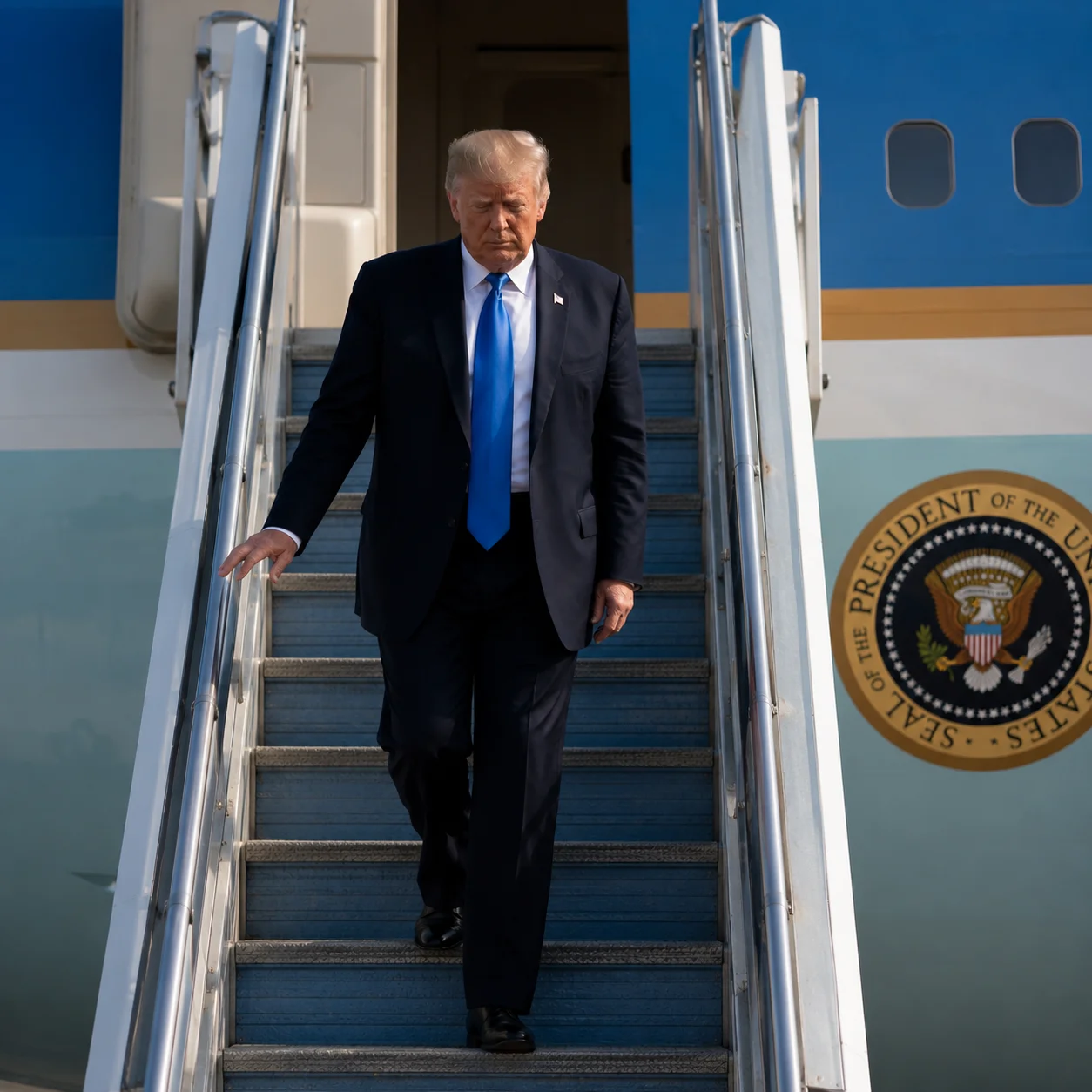
Air Force One touched down at Beijing Capital International Airport on Wednesday, marking the beginning of a three-day state visit that the world has been watching closely. US President Donald Trump stepped onto Chinese soil for the first time in his second term, greeted by a military band, a guard of honour, and dozens of young welcoming attendees — a reception that set the tone for what promises to be a consequential few days in global diplomacy.
A Reception That Spoke Volumes
Protocol watchers noticed something immediately. When Trump visited China back in 2017, he was received by then-State Councilor Yang Jiechi — a senior but not top-tier official. This time, Chinese Vice President Han Zheng was at the tarmac personally. In diplomatic language, that is Beijing signalling that it takes this visit seriously.
Trump arrived at his hotel shortly after landing, with no official engagements on the calendar until Thursday morning — giving both sides time to settle before the real business begins.
Who Made the Trip
The delegation accompanying Trump reads like a who’s who of American corporate power. Nvidia’s Jensen Huang and Tesla’s Elon Musk are on board, as are Apple’s Tim Cook, Goldman Sachs’ David Solomon, BlackRock’s Larry Fink, Blackstone’s Stephen Schwarzman, Boeing’s Kelly Ortberg, Citigroup’s Jane Fraser, GE Aerospace’s Larry Culp, Micron’s Sanjay Mehrotra, Qualcomm’s Cristiano Amon, and Cargill’s Brian Sikes — among others.
Secretary of State Marco Rubio and Defense Secretary Pete Hegseth are also part of the official delegation, alongside Treasury Secretary Scott Bessent, who is flying in from Seoul after concluding a separate round of trade talks with Chinese Vice Premier He Lifeng.
Trump’s son Eric and daughter-in-law Lara Trump also made the journey. Notably absent, however, is First Lady Melania Trump — a contrast to the 2017 visit when both she and Xi’s wife Peng Liyuan were present for the occasion.
What’s Actually on the Table
On Thursday, President Xi Jinping will host Trump for formal summit-level talks at the Great Hall of the People. The agenda is packed and politically sensitive on multiple fronts.
Trade and tariffs remain the headline issue — bilateral trade between the two countries reached an estimated $414.7 billion in 2025, yet the relationship has been increasingly strained by disputes over technology restrictions, tariff battles, and China’s grip on rare earth exports.
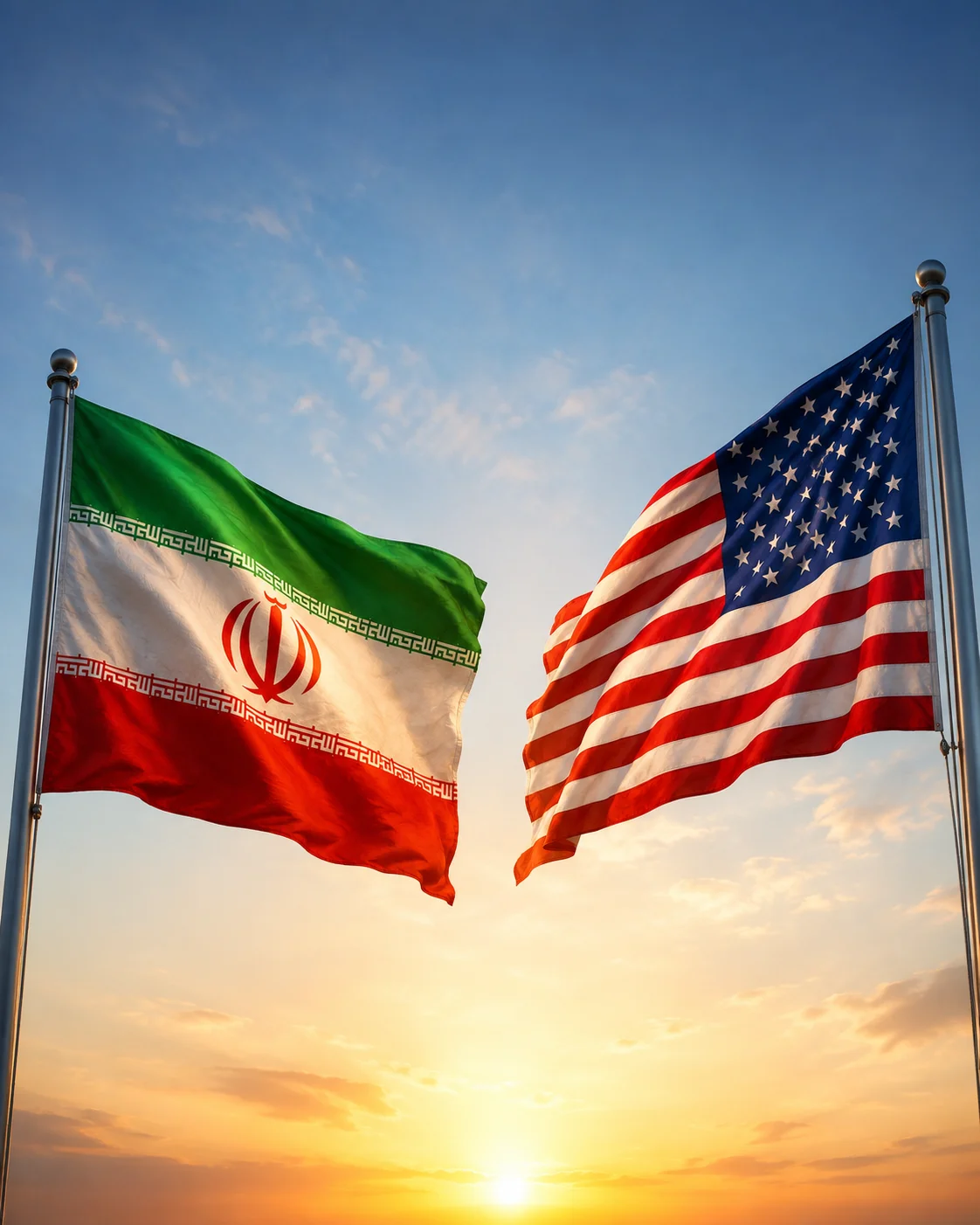
The Middle East conflict also looms large. The US and Israel launched strikes against Iran on February 28th, triggering retaliatory moves and the closure of the Strait of Hormuz before a prolonged ceasefire took hold. Washington has accused Beijing of bolstering Iran’s military and economic capacity, while China has called for dialogue. Trump has indicated he may ask Xi to use his influence with Tehran.
Taiwan will also be raised, including the status of a pending $14 billion US arms package for the island. Trump has also said he intends to bring up the case of imprisoned Hong Kong media figure Jimmy Lai — a point Beijing will almost certainly push back on.
A Trip Delayed, But Not Derailed
This visit was originally planned for late March, but was postponed due to the outbreak of conflict with Iran. The fact that it is now taking place — with this level of fanfare and a delegation of this magnitude — signals that both Washington and Beijing see value in keeping communication lines open despite their many differences.
With so much riding on the outcome, the next two days of talks could shape the direction of the world’s most consequential bilateral relationship for years to come.
Source:
Reuters / Geo News
Our audience means everything to us.
Have feedback or suggestions to make us better? We’re always listening—feel free to get in touch with us at truthora2026@gmail.com



Leave a Comment